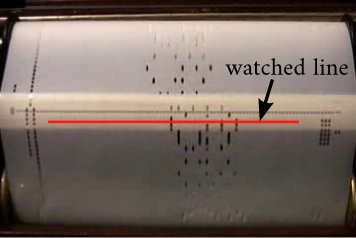
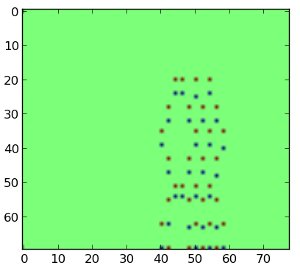
This is a really great demo in which first lightning is synthesized and then thunder that you can actually hear and actually sounds like thunder!
p.s. Here is a link to the source code for synthesizing thunder!
p.p.s. Andrew Glassner, a research in Washington State, has also written about his model for synthesizing the sounds of thunder while working at Microsoft!
Sunday, August 10, 2014
Sunday, August 3, 2014
Understand Dither Intuitively with Nigel Redmon's Javascript Applet
Over on Earlevel, Nigel Redmon writes on a number of topics that can help you increase your understanding of DSP at an intuitive level. Most recently, I've found his "Dither Widget" exciting! Go ahead and play with it and see if it doesn't increase your understand of the technique of dither in DSP.
Sunday, July 27, 2014
Expert: Richard G. Lyons' DSP Sequel
One of the most valuable books I have ever read was Understanding Digital Signal Processing by this author. I highly recommend it to people who want to get started with digital signal processing.
Suddenly, just this evening I noticed Lyons released a sequel!
Just looking at the table of contents,
I was impressed with the promise of clearly-explained algorithms.
It appears to deliver algorithms like:
- "Efficient DC Blocking"
- "A Fast Binary Logarithm Algorithm"
- "Ultra-Low Phase Noise DSP Oscillator"
Some chapters help alleviate common, time-consuming tasks, others promise higher signal-to-noise ratios than ever before. And some just help you do more calculations per millisecond than it ever seemed possible.
Considering the epic impact of Lyons' previous book
people on the comp.dsp newsgroup still rave about this author
I'm rating this a strong buy recommendation. BTW, I've placed it, along with his first book and a few others at BuildInstruments.com on the bookshelves.
Sunday, July 20, 2014
Richard Moore's DSP Code for a Piano String
Richard made this program to synthesize a piano string available for people to experiment with for free!
http://www.mathworks.com/matlabcentral/fileexchange/46984-saitispianomodel-m
He would like some help updating the model so it can simulate a "prepared piano," so if you can help him, get in touch with him. You can see his email address on this page:
http://www.mathworks.com/matlabcentral/fileexchange/authors/343450
Richard's Piano script is based on Master's thesis work by Charalampos Saitis which you can find at http://www.music.mcgill.ca/~harry/pdfs/Ch_Saitis_MA_Thesis.pdf .
Also, if you don't have Matlab, try out GNU Octave. It's free, very compatiable and quite good!
http://www.mathworks.com/matlabcentral/fileexchange/46984-saitispianomodel-m
He would like some help updating the model so it can simulate a "prepared piano," so if you can help him, get in touch with him. You can see his email address on this page:
http://www.mathworks.com/matlabcentral/fileexchange/authors/343450
Richard's Piano script is based on Master's thesis work by Charalampos Saitis which you can find at http://www.music.mcgill.ca/~harry/pdfs/Ch_Saitis_MA_Thesis.pdf .
Also, if you don't have Matlab, try out GNU Octave. It's free, very compatiable and quite good!
Sunday, July 13, 2014
Sunday, July 6, 2014
Sunday, June 29, 2014
Piano Player Rolls Transcribed via DSP
Clever application of DSP!
Zulko extracts notes from a youtube video of a player piano! He talks you through every step of Python to pull it off.BTW, this video tours a factory where rolls for player pianos are made! It shows a piano player entering notes one step at a time, some classic computers used in the process and many other fascinating details!
Subscribe to:
Posts (Atom)